Showing posts with label Astronomy. Show all posts

Chandrayaan-3 captures 1st ever photos of the moon's south pole by lunar lander

The first images from India's Chandrayaan-3 mission taken after the probe's historic moon touchdown reveal a pockmarked surface near the lunar south pole.

The Indian Space Research Organisation (ISRO) shared the images on X, formerly Twitter, on Wednesday (Aug. 23), about four hours after the Chandrayaan-3 spacecraft completed its smooth descent. 

The first set of four images were taken by the lander's Horizontal Velocity Camera as it was nearing the surface of the moon. An additional image from the Landing Imager Camera, shared a little later, shows a glimpse of the landing site, including a portion of the spacecraft's landing leg and its shadow. 

"The communication link is established between the Ch-3 Lander and MOX-ISTRAC, Bengaluru," ISRO said in a post on X. "Chandrayaan-3 chose a relatively flat region on the lunar surface," the agency added in the subsequent post.

The landing made India only the fourth country in history to successfully put a spacecraft on the surface of the moon, after the United States, the former Soviet Union and China. Chandrayaan-3 is also the first spacecraft in history to touch down near the lunar south pole, an area that is currently attracting the attention of scientists and space agencies from all over the world. 

Scientists think that the permanently shadowed polar craters contain water ice trapped in the rocks, which could be extracted and used to support a permanent human presence on Earth's natural companion. Moreover, these lunar craters could be used to build next-generation telescopes that would allow astronomers to see farther than they can today. 

A sequence of images of the moon's surface taken by India's Chandrayaan-3 spacecraft during its descent to the lunar south pole.

A sequence of images of the moon's surface taken by India's Chandrayaan-3 spacecraft during its descent to the lunar south pole on Aug. 23, 2023. (Image credit: ISRO)

A small rover called Pragyan arrived on board Chandrayaan-3 and will soon deploy and commence its exploration of the exciting region, so many more fascinating images are likely to come soon. Both the rover and the lander, however, are unlikely to remain operational for more than two weeks, as ISRO doesn't expect the vehicles' batteries to make it through the two-week lunar night. 

Chandrayaan-3 was India's second try at landing near the moon's south pole. The country's first attempt at a lunar touchdown, in September 2019, failed when the Chandrayaan-2 lander crashed into the moon due to a software glitch.

India's triumph comes only three days after Russia lost its Luna-25 mission, its first attempt to put a spacecraft on the moon's surface in 47 years. Luna-25, too, was aiming for the lunar south pole, but crashed into the moon instead after a botched orbital maneuver on Saturday (Aug. 19). 

BREAKING: Mysterious Dark Vortex on Neptune Seen From Earth For First Time

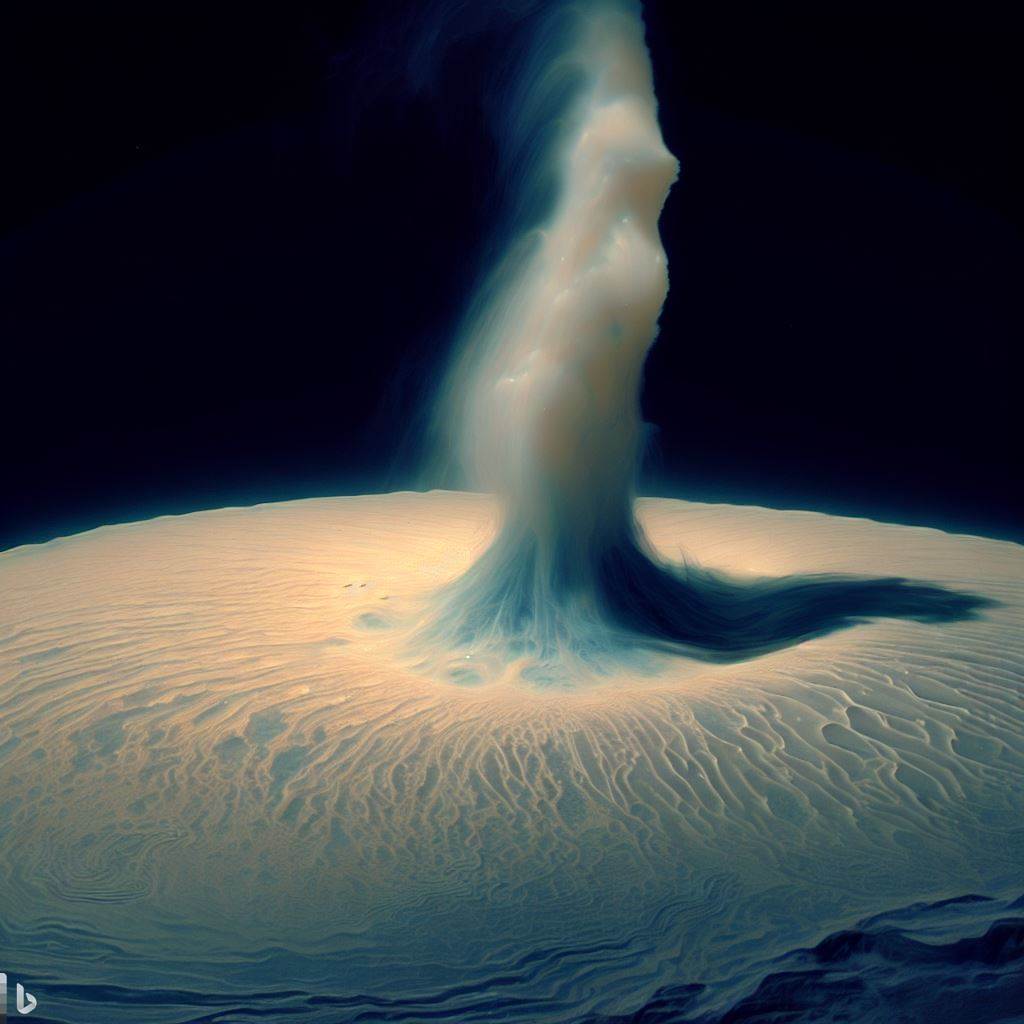
Ever since Voyager 2 flew past Neptune in 1989, the giant dark smudges that appear in the distant planet's atmosphere have presented a strange puzzle.

Now, for the first time, we have observed one with Earth-based instruments in unprecedented resolution, helping scientists figure out why those patches appear so dark and why they are so different from spots on other planets.


"Since the first discovery of a dark spot, I've always wondered what these short-lived and elusive dark features are," says astronomer Patrick Irwin of the University of Oxford in the UK.

"I'm absolutely thrilled to have been able to not only make the first detection of a dark spot from the ground, but also record for the very first time a reflection spectrum of such a feature."

Neptune's dark vortices are actually anticyclonic storms, like the Great Red Spot on Jupiter, but they differ in several key, and mysterious, ways. For one thing, they are comparatively short-lived, appearing and dissipating every few years.

Neptune as it appears to the Very Large Telescope's MUSE. (ESO/P. Irwin et al.)

They are also thought to be relatively devoid of cloud in their centers, compared to storm vortices on Saturn and Jupiter. The clouds we can detect are fluffy white clouds that appear around the edges, probably as a result of gasses freezing into methane ice crystals as they are lifted up from lower altitudes.

But learning anything more has been challenging due to Neptune's distance and the short-lived nature of the vortices. Since 1994, the Hubble Space Telescope has been the only instrument capable of observing and tracking them, which limits the range of wavelengths in which the planet can be seen.

When a large storm vortex appeared in 2018, however, Irwin and his team got to work with another instrument: the Very Large Telescope's Multi Unit Spectroscopic Explorer (MUSE). MUSE was able to detect the sunlight reflecting off Neptune, and split it into its constituent wavelengths to reconstruct a 3D spectrum of the planet.

Different wavelengths are associated with different altitudes in Neptune's atmosphere, so the researchers were able to work out the altitude of the dark spot. And they found something surprising: it didn't appear to be a "hole" in Neptune's atmosphere after all.

Rather, the deeper color seems to be the result of a darkening of particles in the layer of hydrogen sulfide that sits below the top layer of Neptune's atmospheric aerosol haze. This, the researchers believe, could be the result of local heating in the deep part of an anticyclonic vortex, which vaporizes the hydrogen sulfide ice to reveal a darker vortex core. The researcher's observations are consistent with the particles in the aerosol layer above becoming smaller, reducing opacity.

They found another surprise, too: a bright cloud accompanying the vortex. This was not one of the methane clouds often found accompanying Neptune vortices, but a type of cloud never seen before. Rather than sitting higher in the atmosphere, it seemed to be at the same altitude as the dark vortex.

What this is, and whether any of the team's proposed mechanisms for Neptune's atmospheric darkening are correct, will need to be investigated further. But, with ground-based observations of Neptune now possible, we seem to be much closer to answers.

"This is an astounding increase in humanity's ability to observe the cosmos," says astronomer Michael Wong of the University of California, Berkeley.

"At first, we could only detect these spots by sending a spacecraft there, like Voyager. Then we gained the ability to make them out remotely with Hubble. Finally, technology has advanced to enable this from the ground."

The research has been published with Nature Astronomy.

You'll travel nearly a trillion miles in your lifetime, even if you never leave home. Explained

In the vast cosmic theater, where galaxies dance and stars shimmer, we, the inhabitants of a pale blue dot, are on a perpetual journey.


Even if one were to remain stationary, nestled in the comforts of their home, the universe ensures that they are always in motion, traversing the vast expanse of space.

Consider this: over the span of a human lifetime, even without the deliberate act of travel, one covers a staggering distance of nearly a trillion miles. This journey is not just a testament to our planet's motion but a reflection of the intricate ballet of the cosmos.

Our Earth, a mere speck in the vastness, rotates on its axis, taking all its inhabitants on a daily voyage. Those residing near the equator experience the swiftest of these journeys, moving at speeds of approximately 1,000 mph. But this rotation is just the beginning. Earth, in its eternal dance, orbits the Sun, adding another 19 miles per second to our cosmic journey.

Yet, the story doesn't end here. Our Sun, the radiant beacon of our solar system, orbits the center of the Milky Way, adding layers to our journey through space. And the Milky Way, in its majestic motion, is headed towards a rendezvous with the Andromeda galaxy, while also being influenced by the gravitational pull of the Great Attractor.

When we account for all these motions, from the rotation of our planet to the vast movements of our galaxy, each of us travels an astonishing 930 billion miles in an 80-year lifespan.

As we contemplate this journey, it's humbling to realize that even in stillness, we are part of the grand cosmic dance. In the words of Carl Sagan, "We are all travelers on an endless voyage of discovery."

Black Hole Update: Black hole called ‘The Unicorn’ found ‘near’ Earth

In the vast cosmic ocean, where stars twinkle and galaxies spiral, there emerges a tale of an enigmatic entity, a black hole, unlike any we've known. 

This newly discovered celestial wonder, nestled in the embrace of a red giant star, has been aptly named the "Unicorn" – not just for its rarity but also for its location in the constellation Monoceros, the Greek word for 'unicorn'.

The "Unicorn" is a testament to the universe's capacity for wonder. It is a stellar mass black hole, weighing in at a mere three times the mass of our Sun. Such a size places it in a mysterious realm, a so-called "mass gap" between the heaviest neutron stars and the lightest black holes previously known.

Black holes, these enigmatic regions of spacetime where gravity is so intense that nothing, not even light, can escape, have long captivated our imagination. Predicted by Einstein's theory of general relativity, they are the universe's ultimate enigmas, holding secrets of the cosmos' very fabric.

The discovery of the "Unicorn" challenges our understanding of these cosmic behemoths. Its existence hints at the intricate dance of stellar evolution, where stars, depending on their mass, meet varied fates – from the serene shedding of outer layers to form nebulae to the cataclysmic explosions known as supernovae.

Yet, the "Unicorn" remains elusive, revealing itself not through its own light but through the gravitational pull it exerts on its red giant companion. This gravitational dance causes tidal distortions, altering the shape and light of the star, and whispering to us the presence of this hidden black hole.

As we continue our cosmic journey, discoveries like the "Unicorn" remind us of the universe's vastness and mystery. In the words of Carl Sagan, "Somewhere, something incredible is waiting to be known."

Research Paper

Voyager sends 'heartbeat' signal from 12 billion miles away after NASA lost contact

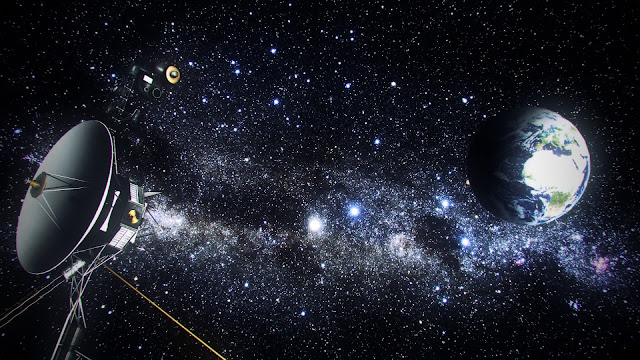
NASA's Voyager 2 probe, currently cruising beyond the edge of the solar system more than 12.3 billion miles from Earth, has sent a hopeful signal back to mission control. 

This comes after a series of planned operations on July 21 accidentally angled the probe's antenna about two degrees away from Earth, resulting in a near-total communication cut-off between Voyager and NASA's Deep Space Network.

The signal, referred to as a "heartbeat," confirms that the spacecraft is still broadcasting, which was expected by engineers at NASA's Jet Propulsion Laboratory (JPL). The next step for NASA is to send a command back to Voyager 2, coaxing the probe into angling its antenna back toward Earth. 

This process takes about 18.5 hours for a command to reach Voyager 2, and another 18.5 hours for Earth to receive a transmission back from the probe.

If the forced realignment fails, Voyager 2 is expected to reset its antenna to the Earth-facing position on Oct. 15, in one of a planned series of auto-resets that occur throughout the year. Voyager 2 and its twin Voyager 1 were launched into space in August and September 1977, respectively. 

Both probes ventured past the outer solar system planets before heading toward the edge of the heliosphere, the outermost layer of the sun's atmosphere, which separates our solar system from interstellar space.

Voyager 1 reached interstellar space in August 2012 and is currently cruising about 14.8 billion miles from our planet, making it the single most distant human-made object from Earth. Voyager 2 followed in its twin's thruster-steps several years later, leaving the heliosphere in November 2018. Both probes currently have enough power and fuel to last until at least 2025, according to NASA.

Source

Alien Planet Outside Our Solar System Is Sending Repeating Radio Signals Towards Earth, Scientists Say

In a major breakthrough for the search for extraterrestrial life, scientists have detected repeating radio signals from an Earth-like planet outside our solar system.

The signals, which were detected by the Breakthrough Listen project, are coming from a planet called YZ Ceti, which is located about 130 light-years from Earth.

The discovery of these signals is a major step forward in the search for alien life. It is the first time that scientists have detected repeating radio signals from an Earth-like planet. The signals are also very strong, which suggests that they could be coming from an intelligent civilization.

The Breakthrough Listen Project

The Breakthrough Listen project is a global effort to search for extraterrestrial life using radio telescopes. The project is funded by the Breakthrough Initiatives, a foundation established by Yuri Milner, Stephen Hawking, and Mark Zuckerberg.

The Breakthrough Listen project has been using a variety of radio telescopes to search for extraterrestrial life. In 2017, the project announced the discovery of a set of repeating radio signals from a star called KIC 8462852. These signals were dubbed “Wow!” signals because of their significance.

However, the Wow! signals were not repeated, and scientists are not sure if they came from an alien civilization. The discovery of the signals from YZ Ceti is more significant because they are coming from an Earth-like planet.

The Planet YZ Ceti

YZ Ceti is a small, cool star that is located about 130 light-years from Earth. The star is about 10% the mass of the sun and has a surface temperature of about 2,300 degrees Fahrenheit.

YZ Ceti has one known planet, which is called YZ Ceti b. YZ Ceti b is an Earth-like planet that is about the same size as Earth and has a similar composition. The planet orbits its star every 3.6 days and is located in the habitable zone of its star, which means that it could potentially support liquid water on its surface.

The Radio Signals

The radio signals from YZ Ceti were detected by the Green Bank Telescope in West Virginia. The signals were detected at a frequency of 1.1 gigahertz and lasted for about one millisecond.

The signals were detected in 2022, but they were not announced until 2023. The scientists who detected the signals wanted to make sure that they were not coming from a natural source before they announced their discovery.

The Implications of the Discovery

The discovery of the radio signals from YZ Ceti is a major step forward in the search for extraterrestrial life. It is the first time that scientists have detected repeating radio signals from an Earth-like planet. The signals are also very strong, which suggests that they could be coming from an intelligent civilization.

The discovery of these signals is a reminder that we are not alone in the universe. There are billions of stars in the Milky Way galaxy alone, and each star could potentially have planets. It is possible that there are other civilizations out there that are just as intelligent as we are.

The discovery of these signals is also a challenge to us. It is up to us to continue to search for extraterrestrial life and to learn more about the universe. We need to develop new technologies that will allow us to search for life on other planets. We also need to develop new ways to communicate with alien civilizations.

The discovery of the radio signals from YZ Ceti is a momentous occasion. It is a reminder that we are not alone in the universe and that there is still much that we do not know about the cosmos.

The Future of the Search for Extraterrestrial Life

The discovery of the radio signals from YZ Ceti is a major breakthrough, but it is only the beginning of the search for extraterrestrial life. There are billions of stars in the Milky Way galaxy alone, and each star could potentially have planets. It is possible that there are other civilizations out there that are just as intelligent as we are.

We need to continue to search for extraterrestrial life and to learn more about the universe. We need to develop new technologies that will allow us to search for life on other planets. We also need to develop new ways to communicate with alien civilizations.

The search for extraterrestrial life is a challenging but exciting endeavor. It is a reminder that we are not alone in the universe and that there is still much that we do not know about the cosmos.

Reference(s):

Research Paper

All of the bases in DNA and RNA have now been discovered in meteorites that fell to Earth

In a groundbreaking discovery, scientists have found all five bases that store information in DNA and RNA in meteorites that fell to Earth within the last century. 

These nucleobases - adenine, guanine, cytosine, thymine, and uracil - combine with sugars and phosphates to make up the genetic code of all life on Earth. The discovery adds to the growing body of evidence suggesting that life's precursors may have originated from space.

Adenine, guanine, and other organic compounds have been detected in meteorites since the 1960s. Hints of uracil have also been observed, but cytosine and thymine remained elusive until now. 

The recent discovery was made possible by a new technique developed by geochemist Yasuhiro Oba of Hokkaido University in Sapporo, Japan, and his colleagues. This method gently extracts and separates different chemical compounds in liquified meteorite dust for analysis.

The researchers used this technique to analyze samples from four meteorites that fell decades ago in Australia, Kentucky, and British Columbia. They detected and measured adenine, guanine, cytosine, uracil, thymine, several compounds related to these bases, and a few amino acids. 

The team also measured chemical abundances within soil collected from the Australia site and compared the measured meteorite values with that of the soil. The results suggest that the compounds came to Earth in these rocks.

However, the origin of some detected compounds, including cytosine and uracil, remains uncertain due to the possibility of earthly contamination. Future studies, including the analysis of samples from the asteroid Ryugu brought to Earth by Japan's Hayabusa2 mission, and samples from the asteroid Bennu expected to be returned by NASA's OSIRIS-REx mission in September 2023, may provide further insights.

Research Paper

James Webb Telescope Watched Saturn's moon ejecting record-breaking water plume into space


The James Webb Space Telescope (JWST) is a marvel of modern astronomy that has been observing the universe in infrared wavelengths since its launch in December 2021. One of its first targets was Saturn's moon Enceladus, a small icy world that harbors a global ocean beneath its frozen crust. Enceladus is also known for its spectacular geysers of water vapor and ice that erupt from cracks near its south pole, creating a huge plume that extends far into space.


Using its Near-Infrared Spectrograph (NIRSpec) instrument, JWST was able to map the properties of the plume and measure its composition, size, and speed. The results, published in Nature Astronomy, reveal that the plume is much larger and more powerful than previously thought, and that it contains traces of organic molecules that could be potential building blocks of life.


The plume spans about 9,600 km (6,000 miles), which is 20 times the diameter of Enceladus itself. It ejects water at a rate of about 360 liters (95 gallons) per second, enough to fill an Olympic-sized swimming pool in just a few hours. The water vapor reaches speeds of up to 2 km/s (4,500 mph), escaping the weak gravity of Enceladus and forming a torus-shaped cloud around Saturn's E-ring.


The NIRSpec instrument also detected signatures of methane, ammonia, carbon dioxide, and hydrogen in the plume, as well as more complex organic molecules that have not been identified yet. These molecules are likely produced by hydrothermal vents at the bottom of Enceladus' ocean, where water interacts with hot rocks and minerals. Some of these molecules could be precursors to amino acids, the building blocks of proteins.


The discovery of these organic molecules adds to the evidence that Enceladus is one of the most promising places in the solar system to look for signs of life. Previous observations by NASA's Cassini mission showed that the ocean of Enceladus is salty and alkaline, and that it contains hydrogen gas that could be used by microbes as a source of energy. Cassini also flew through the plume several times and sampled its composition directly, but it did not have the sensitivity or resolution of JWST.


The JWST observations also provide new insights into the origin and evolution of the plume. The researchers found that the plume varies in intensity depending on the position of Enceladus in its orbit around Saturn. When Enceladus is closer to Saturn, the tidal forces exerted by the planet squeeze and heat up the moon's interior, causing more water to escape through the cracks. When Enceladus is farther away from Saturn, the tidal forces relax and the plume becomes weaker.


The researchers also suggest that the plume has been active for a long time, possibly billions of years. This implies that Enceladus has maintained a stable source of heat and water for a long time, which is favorable for the emergence and persistence of life.


The JWST observations are only a glimpse of what this powerful telescope can do to explore the mysteries of Enceladus and other icy moons in our solar system. Future observations will aim to characterize the plume in more detail, identify more organic molecules, and look for possible variations over time. JWST will also complement other missions that are planned or proposed to visit these worlds, such as NASA's Europa Clipper and ESA's JUICE.


Enceladus is a fascinating example of how a small moon can have a big impact on its environment and on our understanding of life in the universe. Thanks to JWST, we can now see this impact more clearly than ever before.


Reference(s): NASA.

'Groundbreaking' Sharp Images of Distant Planetary System Show 3 Planets Are Missing

Astronomers have obtained stunning new images of a young star system that reveal a surprising twist: three planets that were previously detected are now missing. 

The images, taken by two powerful telescopes in Hawaii, show the system with unprecedented clarity and detail, shedding new light on the process of planet formation.

The star system, called LkCa 15, is located about 473 light-years away from Earth. It is a Sun-like star surrounded by a disc of dust and gas, which is the raw material for building planets. In 2015, a team of astronomers claimed to have found evidence of three giant planets, each about 10 times more massive than Jupiter, orbiting within a gap in the disc.


However, a new study, published in The Astrophysical Journal Letters, challenges this claim and shows that the planets were actually an illusion caused by the complex structure of the disc itself. The study is based on new observations made by the Subaru Telescope and the WM Keck Observatory, both located on Maunakea in Hawaii.

The Subaru Telescope used a state-of-the-art instrument called SCExAO (Subaru Coronagraphic Extreme Adaptive Optics), which can block out the bright light of the star and reveal fainter objects around it. SCExAO was coupled with another instrument called CHARIS (Coronagraphic High Angular Resolution Imaging Spectrograph), which can take images of the disc in different colors of near-infrared light.

The WM Keck Observatory used an instrument called NIRC2 (Near-Infrared Camera), which can also block out the starlight and take images at longer infrared wavelengths that are emitted by warm objects, such as young planets. The researchers also analyzed archival data from NIRC2 taken in 2009.

By combining these data sets, the researchers were able to create sharp and detailed images of LkCa 15 and its disc. They found that most of the light that was previously attributed to planets actually came from the edge of a section of the disc that is tilted with respect to the rest of the disc. This edge appears bright because it reflects more starlight than other parts of the disc.

The researchers also performed simulations to show how this edge could mimic the appearance of planets when observed with a technique called sparse aperture masking interferometry, which was used by the previous team to detect planets. This technique combines light from different parts of a telescope's mirror to create an image with higher resolution than possible with a single telescope.

The new study demonstrates that LkCa 15 is a highly complex system that can fool even sophisticated methods of planet detection. It also shows that SCExAO and CHARIS are powerful tools for studying protoplanetary discs and searching for planets around young stars.

The researchers emphasize that their results do not mean that there are no planets around LkCa 15. In fact, they suggest that there may be smaller planets hidden within the disc that are too faint to be detected with current instruments. They also point out that planet formation is still ongoing in this system, and that future observations may reveal new surprises.

"This is a groundbreaking result that shows how far we have come in imaging protoplanetary discs and planetary systems," said Dr. Thayne Currie, lead author of the study and an astrophysicist at NASA-Ames Research Center and the Subaru Telescope. "We are now able to see features in discs that we could only dream of before, and we can use this information to better understand how planets form and evolve."


MIT scientists find signs of potential Alien Life in Venus' atmosphere

Venus, the second planet from the Sun, has long been considered a hostile and uninhabitable world, with a surface temperature of about 470°C and a crushing atmospheric pressure of 92 times that of Earth. 

However, a recent discovery by an international team of astronomers has raised the possibility that life may exist in the clouds of Venus, where the conditions are more temperate and Earth-like.

The researchers, led by Jane Greaves of Cardiff University, detected a chemical signature of phosphine in Venus' atmosphere, using two powerful telescopes: the James Clerk Maxwell Telescope in Hawaii and the Atacama Large Millimeter Array in Chile. Phosphine is a gas that on Earth is produced only by living organisms or in industrial processes. It is highly toxic and flammable, and has a distinctive smell of rotten fish.

The detection of phosphine on Venus is surprising and intriguing, because it implies that there may be some biological or chemical process that is producing the gas in the planet's atmosphere. The researchers estimate that there are about 20 parts per billion of phosphine in Venus' clouds, which is a relatively high concentration compared to Earth.

The team ruled out many possible non-biological sources of phosphine on Venus, such as volcanoes, lightning, meteorites, or chemical reactions involving minerals or sunlight. They concluded that none of these scenarios could account for the amount of phosphine observed, and that the most plausible explanation is that there are some forms of life in Venus' clouds that are generating the gas as a by-product of their metabolism.

However, they also cautioned that this is not a definitive proof of life on Venus, and that more observations and experiments are needed to confirm or refute their hypothesis. They also acknowledged that there may be some unknown mechanism that could produce phosphine on Venus without involving life.

If life does exist on Venus, it would have to be very different from anything we know on Earth. It would have to survive in an extremely acidic environment, with clouds made mostly of sulfuric acid droplets. It would also have to float in the atmosphere, as the surface of Venus is too hot and hostile for any life to survive. It would likely be some sort of microbial or fungal organism, perhaps similar to extremophiles that live in harsh conditions on Earth.

The discovery of phosphine on Venus has sparked a lot of interest and excitement among scientists and the public alike, as it opens up new avenues for exploring our neighboring planet and searching for signs of life beyond Earth. It also challenges our assumptions about where life can exist and what it can look like. As Clara Sousa-Silva, a research scientist at MIT and one of the authors of the study, said: "This means either this is life, or it's some sort of physical or chemical process that we do not expect to happen on rocky planets."


Astronomers Are SHOCKED After A Massive Explosion Shakes The Universe

If you think you have seen some spectacular fireworks on Earth, you might want to think again.

Astronomers have recently witnessed a colossal explosion in space that dwarfed anything we have ever created. This explosion was so powerful that it shook the entire universe and left scientists baffled.

What caused this cosmic blast? The answer lies in one of the most extreme objects in the universe: a neutron star. Neutron stars are the remnants of massive stars that have collapsed under their own gravity after running out of fuel. They are incredibly dense, with a teaspoon of their material weighing billions of tons. They also have intense magnetic fields and spin very fast, sometimes hundreds of times per second.

Some neutron stars are surrounded by a disk of gas and dust that they accrete from a companion star or the interstellar medium. This process heats up the neutron star and causes it to emit X-rays, which can be detected by telescopes on Earth. These neutron stars are called X-ray bursters, because they occasionally undergo thermonuclear explosions on their surface that release a burst of X-rays.

However, what astronomers observed on November 3, 2022 was not a typical X-ray burst. It was something much more powerful and rare: a hyperburst. A hyperburst is a gigantic thermonuclear explosion that releases more energy in a fraction of a second than the Sun does in a year. Hyperbursts are so rare that only one has been observed before, in 2005.

The hyperburst was detected by NASA's Neil Gehrels Swift Observatory, which is designed to catch transient and high-energy events in the sky. The source of the hyperburst was a neutron star named 4U 1820-30, located about 30,000 light-years away in a globular cluster near the edge of the Milky Way galaxy. The hyperburst lasted for about 0.2 seconds and released about 10^40 ergs of energy, equivalent to about 10^27 tons of TNT.

The hyperburst was so bright that it temporarily blinded Swift's X-ray telescope and caused glitches in its data. It also triggered gravitational waves that rippled through space-time and were detected by the Laser Interferometer Gravitational-Wave Observatory (LIGO) and the Virgo interferometer. The gravitational waves confirmed that the hyperburst was caused by a thermonuclear runaway on the neutron star's surface, rather than by a merger or collision with another object.

The hyperburst also had an impact on the surrounding environment. It ionized the gas and dust in the accretion disk and created a shock wave that propagated outward at supersonic speeds. It also heated up the companion star and caused it to expand and lose mass. The hyperburst may have altered the orbital parameters of the binary system and affected its future evolution.

The hyperburst was a remarkable discovery that challenged our understanding of neutron stars and their behavior. It also demonstrated the power and diversity of astronomical phenomena that can occur in our universe. Astronomers are eager to find more hyperbursts and study them in detail, as they may reveal new insights into the physics of matter under extreme conditions.

Hubble Telescope Accidentally Discovers a MIND-BLOWING New Galaxy

Humankind is getting very good at looking deep into space: We have already seen two neutron stars colliding, we have encountered mysterious radio blasts and we are about to see, for the first time, the event horizon of a black hole. 

But there are still some surprises out there, right here in our own corner of the Universe.

Upon retaking the observations of a nearby globular cluster, the Hubble Space Telescope accidentally captured an unpublished galaxy. The newly discovered galaxy was named Bedin I - and is almost as old as the Universe.


The mission was to search for the weaker stars in NGC 6752, a globular cluster 13,000 light-years away within the halo of the Milky Way. But in the distance - about 30 million light-years away "ahead", about 2,300 times farther away than the star they were staring at - Bedin I was lurking.

Considering that our Local Group is about 10 million light years in diameter. If you think of it as a neighborhood, the distance of 30 million is like being in the same cosmic city.

Bedin I is tiny, isolated and old. It is only 3,000 light-years across, compared to the 100,000 light-years in the Milky Way, and is about 1,000 times weaker. It was classified as a dwarf spheroidal galaxy. Generally, spheroidal dwarf galaxies are companions of galaxies or larger systems, but not Bedin I. It is 2 million light-years from the nearest galaxy to be considered a "satellite galaxy."

Based on the light it emits, scientists were able to determine that the galaxy is very low in metals. And since the heavier elements, such as metals, were created in stars and propagated by the Universe after their death, this indicates that Bedin I has a very old population of stars.

It has been estimated that the galaxy is 13 billion years old, newer than the universe in about 800 million years. The low metal content implies that Bedin I has not had any new star formation since. This means that it is a kind of cosmic "living fossil" or time capsule, preserving the conditions of the primordial Universe.

Reference(s): ScienceAlert

NEWS🚨: NASA just revealed revolutionary new spacesuit astronauts will wear on the next Moon mission

NASA has unveiled its new generation of spacesuits, the Exploration Extravehicular Mobility Unit (xEMU), which will be worn by astronauts on the next moon mission - the Artemis program. 

The new suits are designed to be more flexible, comfortable, and durable than their predecessors, the Extravehicular Mobility Unit (EMU) suits used in the Apollo missions .

The xEMU suits are designed to withstand the harsh lunar environment, including extreme temperatures, dust, and radiation. They are equipped with advanced life support systems that will allow astronauts to stay outside the spacecraft for longer periods of time, up to eight hours [2]. The suits also feature improved mobility, with more flexible joints and better range of motion. This will allow astronauts to perform a wider range of tasks, including collecting samples, conducting experiments, and repairing equipment .

One of the most significant improvements of the xEMU suits is the inclusion of a new, more comfortable, and better-designed space helmet. The helmet has a new impact-resistant visor that provides a wider field of view, reducing the risk of accidents and improving situational awareness [2].

The xEMU suits are designed to be adaptable to different body sizes, which means that they can be worn by both male and female astronauts. They are also modular, which means that different parts of the suit can be replaced or upgraded as needed, reducing the cost of maintenance and allowing for more extended use.

NASA has been working on the xEMU suits for several years, and they are expected to be ready for use by the time of the next moon landing, scheduled for 2024. The Artemis program aims to establish a sustainable human presence on the moon by 2028, which will include regular lunar missions and the construction of a lunar gateway.

In addition to the xEMU suits, NASA is also developing a new lunar vehicle, the Lunar Terrain Vehicle (LTV), which will allow astronauts to travel long distances on the moon's surface. The LTV will be equipped with advanced navigation and communication systems, as well as the ability to carry heavy payloads and equipment .

The Artemis program represents a significant step forward in space exploration and could pave the way for human missions to Mars and beyond. With the new xEMU suits and other advanced technologies, NASA is poised to achieve new milestones in space exploration and inspire a new generation of scientists and engineers.

In conclusion, the new Artemis Moon suits, the Exploration Extravehicular Mobility Unit (xEMU), represent a significant technological advancement in space exploration. They are designed to be more durable, flexible, and comfortable than their predecessors, allowing astronauts to perform a wider range of tasks on the moon's surface. With the Artemis program, NASA is poised to achieve new milestones in space exploration, and inspire a new generation of scientists and engineers.

Source

Building blocks of life found in meteorite that crash landed in Gloucestershire


New research has been published on the organic analysis of the Winchcombe meteorite that crash landed onto a driveway in Winchcombe, Gloucestershire in 2021. The research, led by Dr. Queenie Chan, from the Department of Earth Sciences at Royal Holloway, University of London, found organic compounds from space that hold the secrets to the origin of life.


In the study, the analysis found a range of organic matter, which reveals that the meteorite was once from part of an asteroid where liquid water occurred, and if it that asteroid had been given access to the water, a chemical reaction could have occurred leading to more molecules turning into amino acids and protein—the building blocks of life.


The Winchcombe meteorite is a rare carbon rich chondritic meteorite (approximately 4% of all recovered meteorites, containing up to 3.5 weight percent of carbon) and is the first ever meteorite of this type to be found in the U.K. with an observed meteorite fall event, with more than 1,000 eyewitnesses and numerous footages of the fireball.


The amino acid abundance of Winchcombe is ten times lower than other types of carbonaceous chondritic meteorites and was a challenge to study due to the limited detection of amino acids, but with the meteorite so promptly recovered and curated, the team were able to study the organic content of the meteorite prior to its interaction with the Earth’s environment. The organic matter suggests the meteorite could represent a class of unique, weak meteorite not previously studied.


Dr. Queenie Chan, at Royal Holloway, University of London, said, “Meteorite fall happens all year round, however, what makes this meteorite fall so unique is that this is the first meteorite to have been observed by numerous eyewitnesses, recorded, and recovered in the U.K. in the last 30 years.


“Winchcombe belongs to a rare type of carbonaceous meteorite which typically contains a rich inventory of organic compounds and water. The first Winchcombe meteorite stone was recovered within 12 hours of the fireball observation event and properly curated to restrict any terrestrial contamination. This allowed us to study the organic signature truly essential to the meteorite itself.


“Studying the organic inventory of the Winchcombe meteorite provided us with a window into the past, how simple chemistry kick started the origin of life at the birth of our solar system. Discovering these life’s precursor organic molecules allowed us to comprehend the fall of similar material to the surface of the Earth, prior to the emergence of life on our own planet.

“It was an honor to be leading the team on the organic analysis of the first ever successful carbonaceous meteorite recovery in the United Kingdom. It was a pleasure and an exciting journey to be working with highly skilled and enthusiastic scientists across the country.”


The paper is published in the journal Meteoritics & Planetary Science. The wider research of the organic analysis of the Winchcombe meteorite in this study involved collaborations with Imperial College London and the University of Glasgow.


Provided by Royal Holloway, University of London

BREAKING: Something Just Crashed Into The Moon And Astronomers Captured It

Using cameras set to monitor the moon, Daichi Fujii, curator of the Hiratsuka City Museum, recorded an event that occurred on February 23 at 20:14:30.8 Japan Standard Time (7:14 a.m. EST, or 1114 GMT). 

The event appears to be a meteorite impact, and it was located near Ideler L crater, slightly northwest of Pitiscus crater.

Meteors travel on average at around 30,000 mph (48,280 kph), or 8.3 miles per second (13.4 km/s). Their high-velocity impacts generate intense heat and create craters, while also giving out a brilliant flash of visible light. 

Moon impacts can be seen from Earth, as captured above, if they are large enough and occur in an area during lunar nighttime facing Earth.

The newly created crater could be around a dozen meters (39 feet) in diameter and may eventually be imaged by NASA’s Lunar Reconnaissance Orbiter or India’s Chandrayaan 2 lunar probe, Fujii said. 

Although Earth experiences daily meteor collisions, most of them burn up entirely on contact with the atmosphere. However, due to the moon’s thin exosphere, meteors that cannot reach the Earth’s surface usually impact the moon, creating the well-known appearance of craters. These rocks continually bombard the lunar surface, sometimes breaking it down to fine particles or lunar soil.

Capturing these events has scientific value and helps scientists learn about the frequency of impacts on the lunar surface. This knowledge is particularly relevant as the United States and other countries prepare to send astronauts to the moon.

A newly discovered asteroid could collide with Earth in 2046 on Valentine's day and NASA is watching it closely

Valentine’s day 2046 could have quite the attraction, according to a risk list that is managed by the European Space Agency’s Near Earth Objects Coordination Center. 

That’s because a newly discovered asteroid has a small chance of colliding with Earth that day. The asteroid, 2023DW, has a 1-in-625 chance of impacting our planet.

While a 1-in-625 chance doesn’t seem likely, astronomers consider it a relativity high risk of impact. But there is a lot we don’t know about this newly discovered asteroid – like a more precise measurement of its size. 

Astronomers believe the asteroid is around the size of an Olympic pool, roughly 50 meters (164 feet) long. If an asteroid that size collided with Earth, it would cause some damage.

However, the asteroid’s exact shape is unknown, and with the possible impact date being so far away, it’s likely that better calculations of its orbit could see it passing closely to Earth instead of impacting it. 

Still, it’s good to know that astronomers are watching these things, especially with planet-killer asteroids capable of colliding with Earth and destroying civilization lurking out there.

The possibility of its orbiting being better calculated is very high. During the first few weeks after scientists discover a new object, calculations and observations are run to help narrow down information about the object. 

In this case, scientists are working to determine how big the asteroid is, whether its orbit will cause it to collide with Earth, or if it will pass safely past us.

It can often take several weeks to collect the full sweep of data. And, even then, it’s likely that additional observations will yield more data. In the case of 2023DW, the asteroid isn’t big enough to collide with Earth and cause catastrophic damage. 

If it were, NASA or other agencies could use systems like the DART spacecraft to change the orbit slightly, stopping the asteroid from colliding with Earth.

Astronomers discover a new habitable planet, but half of it is in perpetual darkness

A team of international astronomers announced the discovery of an exoplanet that is both eerily similar and close to Earth on a galactic scale. The newly discovered planet Wolf 1069b is about 1.26 times the mass of Earth and 1.08 times its size. 

What's even more intriguing is that it lies in the habitable zone of its host star, which means that water could exist on its surface, making it a potential home for alien life forms.

"When we analyzed the data of the star Wolf 1069, we discovered a clear, low-amplitude signal of what appears to be a planet of roughly Earth mass," said Diana Kossakowski, an astronomer at the Max Planck Institute for Astronomy in Germany.

According to IFLScience, Astronomers have discovered a new exoplanet that they believe could be habitable for extraterrestrial life. The planet, named Wolf 1069b, orbits a red dwarf star 31 light-years from Earth and is located within the Milky Way galaxy. A year on this exoplanet is equivalent to nearly half a month on Earth.

Even though the exoplanet is close to its host star, it doesn't produce excruciatingly hot temperatures. This is because the host star is much smaller than our Sun. The researchers say that Wolf 1069b only receives about 65 percent of the incident radiant power of what the Earth receives from the Sun.

Currently, Wolf 1069b is only 31 light-years away and is the sixth closest Earth-mass planet to its host star in the habitable zone. The nearest star to Earth is 4.2 light years away, while the Milky Way galaxy has a diameter of 100,000 light years and at least 100 billion stars.


Furthermore, Wolf 1069b is far more proximate to its parent star than the Earth is to the Sun. This means that Wolf 1069b does not rotate in relation to the red dwarf and always presents the same face toward its stellar neighbor. Because of this, one side of the planet is lit, while the other is perpetually dark. The exoplanet's star-facing side likely has a temperature of roughly 13 degrees Celsius, making it hypothetically conducive to the emergence of alien life if the exoplanet is actually enshrouded in an alien atmosphere.


Scientists are now looking forward to the completion of powerful next generation telescopes that can discover and analyze the atmospheres of distant exoplanets like this one. Unfortunately, that's a decade or so away.

Hubble May Spots a Supermassive Black Hole Breaking Free From Its Galaxy

Scientists using the ever-faithful Hubble Space Telescope (HST) believe they've spotted their most terrifying discovery to date: A "rogue" supermassive black hole, unshackled from the heart of its galaxy, prowling across the cosmos at nearly a thousand miles per second.


If their findings hold water, it would make for some of the best evidence to date of a supermassive black hole being ejected from its host galaxy.


"These events have been predicted by theory, but up until now, there’s been little evidence for them," astronomer Charlotte Angus of the University of Copenhagen who was not involved in the study, told ScienceNews.


Lead author Pieter van Dokkum, an astrophysicist at Yale University, remarked to the publication that "whatever it is, we haven’t seen it before."


While their study awaits formal publication in the Astrophysical Journal Letters, the preprint clearly already has some scientists abuzz with excitement. "The observations are all fitting together with this scenario," Manuella Campanelli, a prominent astrophysicist renowned for her work on black holes who was not involved in the study, told Insider.


And this supermassive black hole isn't only destroying everything in its path. Based on the Hubble images, it appears the rogue black hole is producing a trail of nascent stars as it passes. You read that right: It may actually be spawning stars, too, rather than just destroying them.


In fact, this streak of stars is what led to the rogue black hole's discovery in the first place. Because a black hole is invisible, astronomers must observe the matter it surrounds itself with. In the case of supermassive black holes, that'd typically be a luminescent disk of gasses and stars. But in the case of this rogue supermassive black hole detached from any galaxy, it, fortunately, left some sidereal breadcrumbs for astronomers.


"I thought that I'd actually made an error that there was this weird streak in the image," van Dokkum told Insider.


What remains unclear, though, is what could have forced the rogue black hole out of its original galaxy. The most likely theory, per van Dokkum, involves galactic mergers. When two galaxies merge with each other, typically, so do their supermassive black holes.


But throw a third one into the mix, and all bets are off. Van Dokkum and his team suspect that around 39 million years ago, a third galaxy interfered with the merger, butting one of the supermassive black holes out and turning it rogue.


While they note that more research is needed before a definitive conclusion can be reached, the researchers have already spotted a strong clue in the theory's favor: a trail running opposite to the rogue black hole's, which they believe leads to the merging galaxies it was booted from.


"The picture really tells the story," van Dokkum told Insider.


Dokkum says that the next step will be trawling through old Hubble data to find evidence of similar streaks that may indicate other rogue black holes.

NASA Rover Snaps Amazing View of Sunset on Mars

Dying of the Light

On February 2, the Sun slipped behind the Martian horizon and engilded a plume of clouds, revealing epic rays of light. Capturing that rare and ineffable atmospheric display was NASA's Curiosity rover, the first time that such sun rays have been so clearly observed on Mars, according to NASA.

The dramatic sunset was painted in light known as crepuscular rays. Colloquially, you may know them as "god rays," often observed on Earth as divinely bright shafts of light bursting through clouds that seem fit to usher in a deity's descent from the heavens.

The image was taken as part of NASA's twilight cloud survey. Since 2021, the agency has been snapshotting noctilucent clouds, or night shining clouds, in an effort to better understand the Martian atmosphere.

These noctilucent clouds appear in higher and colder altitudes than typical Martian clouds which rarely exceed an altitude of 37 miles above ground, suggesting they may be composed of dry ice rather than water ice.

Illuminating Iridescence

That was not the only rare beauty Curiosity managed to capture in twilight. On January 27, the Mars rover imaged a feather-shaped, iridescent cloud, a bright gossamer scar against the darkening sky.

"Where we see iridescence, it means a cloud's particle sizes are identical to their neighbors in each part of the cloud," Mark Lemmon, a planetary scientist at the Space Science Institute, said in a NASA statement.

"By looking at color transitions, we're seeing particle size changing across the cloud," he added. "That tells us about the way the cloud is evolving and how its particles are changing size over time."

Previous cloud-capturing surveys on Mars were conducted in black-and-white navigation cameras, NASA said, which allowed scientists to better track a cloud's structure in motion.

But to discern the composition of cloud particles as they grow great in number, NASA used Curiosity's Mastcam, capable of capturing the colorful images you've seen here.

Both were shot as panoramas, producing 28 separate images beamed back to Earth, where they were later stitched back together.

For the first time ever, astronomers capture a baby planet carving out a home for itself

Astronomers have detected a small, compact source embedded in a gap in the disk surrounding a young star. They believe it is a baby planet in the process of growing.

Protoplanetary systems offer rare glimpses into the evolutionary history of solar systems like our own. We know already from extensive observations and theory that solar systems start out as vast clouds of interstellar gas that then compress and begin to rotate. Eventually that rotating gas flattens into a disk and planets begin forming around a central core.

While we have a very good understanding of the general picture, we do not understand the details of how planets form, especially the differences between inner rocky planets and outer giant worlds. So the more direct observations we can make of protoplanetary systems the better our understanding can be.

Unfrtunately the process of planet formation plays out over millions of years, so it's not like we can just stare at one system and watch it evolve before our very eyes.

Or can we?

A team of astronomers have released a series of observations going back almost a decade of the system called HD169142. This system has a very fortunate alignment, as it appears face on from our field of view, so we get a complete view of the entire system. The system itself is a disk in the process of forming planets.

Previous observations had already identified a ring-like gap in the disk sitting about 37 AU from the central star. Follow-up observations discovered a small object embedded in that gap. The team performed repeated observations over several years and found that the small, compact object was moving.

The team argues that they are watching a baby planet move around a star. They believe it's a planet because the motion of the bright source fits with the typical Keplerian motion of a planet around a star. Second, the edges of the gap are very bright, which is expected from theoretical simulations where a planet has carved out a gap in the disk from its gravity.

Lastly, the team has observed spiral-shaped structures in the disk emanating away from the gap. This is also expected from theoretical calculations based on the gravitational influence of the planet on the rest of the disk.

They believe that this protoplanet is roughly the mass of Jupiter and is still in the process of forming. It has already accumulated a lot of gas and cleared that gas out from its ring, and more gas is likely funneling onto the planet from the surrounding disk. We do not yet have the observational capabilities to determine if other planets are forming within the disk, but continued studies of this baby system can shed a light on how planets like our own Jupiter form.

The work is published on the arXiv preprint server.