Showing posts with label Time Travelling. Show all posts

Professor Brian Cox Proves That Time Travel Is Possible With This Amazing Experiment


Is time travel possible? Well, we might find the answer in this amazing video. Professor Brian Cox, a Doctor Who admirer, makes a stunning experiment to prove the Physics and possibility of time travel.


His conclusion: Time travel is possible, but not into the past but only into the future!

We May Be Able to Built Rockets That Can Go 99.99% the Speed of Light

Theoretical physics often lifts the sanctions we set on our own imaginations. Whether it's exploring the possibility of warp drives or understanding the rate of the Universe's expansion, we are quick to explore the unknown on our chalkboards until our tech is ready for our ideas.

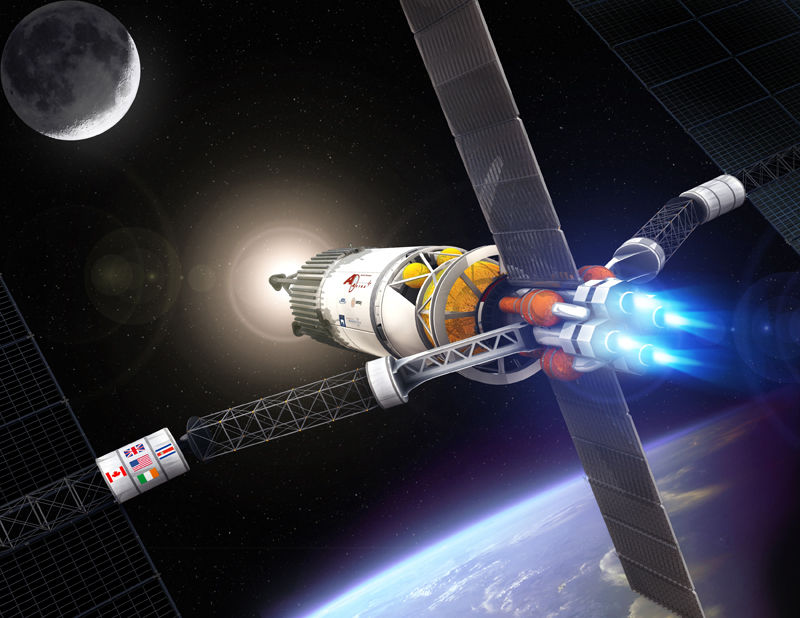
In a similar deep-dive into the theoretical, a Norwegian professor argues in the journal Acta Astronautica for the of possibility of photon rockets that can reach 99.999 percent of the speed of light (300,000 km/s [186,000 mph]).

Image result for NASA's Engines and Possible Speed of Light Propulsion?

The paper asserts that, while humanity can't do it anytime soon, we could potentially build a spacecraft that falls just short of the ultimate speed limit sometime in the future when the necessary technology is feasible.

Espen Gaarder Haug is a professor of quantitative finance at the Norwegian University School of Life Sciences who believes that the math in contemporary physics isn't too distant from the math in quantitative finance.


This background gave Haug an unconventional perspective for his predictions on photon rockets. Haug's paper outlines the mathematics involved in developing a rocket that could take us to speeds just shy of light speed by taking cues from projects that utilise photons as driving mechanisms.

Such a photon rocket could make the idea of deep space travel far more attainable, and could open up the Universe to the human race. While this idea may seem improbable, the proposal stays within the limitations of the laws of natural physics.

Haug asserts to Forbes that, as long as none of the fundamental particles travel faster than the speed of light, then his proposal on spacecraft speed "must also be the absolute maximum speed limit for a rocket".

However, Haug makes it clear that we have a long way to go before we can develop photon rockets that can send materials or people into outer space. While the promise of using any fuel as long as it can be converted entirely into light Energy is exciting, we would need a particle accelerator magnitudes stronger than Europe's Large Hadron Collider.

This means that our dreams of traveling to Mars in less than 5 minutes might need to be put on hold until we have a few major breakthroughs in particle physics.

A Team Astronomers Have Discovered Another Star That Has Thrilling Dips In Light For Anonymous Reasons

Stars shine and twinkle, but if one abruptly gets 65% dimmer in one day, then there is something unusual going on. An international team of Scientists, headed by Dr Simone Scaringi from the Max Planck Institute for Astrophysics, has detected a young star going through unbalanced and extreme dimming over a period of 25 days. The object is called EPIC 204278916, is a low-mass star encircled by a tilted proto-planetary disk, which might be the cause of the unfamiliar light, observed.


The star was founded by the planet hunting telescope Kepler during its K2 mission, and it was witnessed for almost 79 days. Serendipitously, in the first two weeks of detection, the star's brightness varied harshly, settling on a steady variation after the 25th day. Dr. Scaringi told IFLScience, "Other somewhat comparable dipping young stellar objects have been discovered in the past, but I think it is reasonable to say that none have been shown to display such extreme dipping activities for such a short time."

This star will jog the memory people of Tabby’s star, it became an immediate sensation for the (very far-off) option that the dimming could be affected by a Dyson sphere, a theoretical mega-structure built by an innovative alien race to get the most of the energy taken from a star. So is EPIC 204278916 surrounded by an even bigger Dyson sphere? Not certainly. Explanations with the Atacama Large Millimeter/sub-millimeter Array (ALMA) have revealed that this star is not surrounded by an alien mega-structure but a more “traditional” mass disk.

Scaringi added, "We have discovered it to be hard to fully explain the explanations, typically because the transiting material needs to be very huge to cause the detected dips (similar to the size of the star) and transfer the star relatively fast, but we do wonder on two scenarios. It is indeed possible that the inner disk is twisted with respect to the outer disk,which is resolved with the Atacama Large Millimeter/sub-millimeter Array ALMA observatory. This might cause erratic dips as the material being accreted by the star is twisted and blocks some of the starlight. Another possibility is that the starlight is being blocked by some transiting circum-stellar clusters, probably cometary-like debris."

Published in a paper which is available online and acknowledged for publication in the Regular Notices of the Royal Astronomical Society, the astronomers has excluded that the star itself is changing radically, though they were able to find out some regular changings that happens as the star rotates. EPIC 204278916 has had only 1/3 of the observing time as that for Tabby’s star, so future research should reveal more information. Kepler will re-observe the region next year, and the astronomers are following a strategy to pursue this source from earth based telescopes as well.

Weak Gravity Is Explainable With 10 Million Billion New Discovered Particles


Out of the four, gravity is one most fundamental force we are familiar with. It keeps Earth rotating around the Sun, and it makes up our every morning when we try to leave the bed. Gravity looks so familiar and until now it is the most mysterious force of all.


Gravity is extremely weak. Yes, it looks strong for us because Earth is massive, but even a little magnet can overcome gravity. The weakness of gravity is good update for us, planets and stars can form, but it does not actually fit well in particle physics. We have no way to describe why gravity should be so weak. A new concept, N naturalness, has a fascinating solution to describe weak gravity. Instead of having three relations of particles (each with two quarks, an electron-like particle, and one neutrino), there are in fact 10 quadrillion (1016) relations.

Co-author Tim Cohen, from the University of Oregon in Eugene told New Scientist, "The idea is a little wild. The lack of new physics at the LHC has inspired us to, instead of presenting a few new particles, introduce 1016 new particles."

This concept needs a single kind of particle working during the first moments of the Big Bang, called a reheaton. This particle would decay in the course of the cosmic inflation, and meanwhile particles desire to be in the lowest possible energy state, the resulting ‘allowed’ particles are the identified members of the Standard Model along weak gravitational relations. The billions upon billions of never- seen-before particles might seem slightly ridiculous, but it is not the first theoretical physics indication that uses a large number of parameters to find a suitable solution. It is ordinary that constants and laws of the universe fall into a certain array, and when this principle seems to be violated (like a weak gravity, crystal-perfect for us), it could specify that there is more science for us to explore in that direction.

The Standard Model does deliver us with the best explanation of particle physics, but we know it is limited, so physicists are searching beyond it both in theory and experimentations. Some of the claims of N naturalness can be verified by current experiments, so we might quickly see if this strange idea has some truth behind it.