Showing posts with label Voyager 2. Show all posts

NASA just brought a spacecraft 23 billion kilometres way from Earth to LIFE and the results are Astonishing

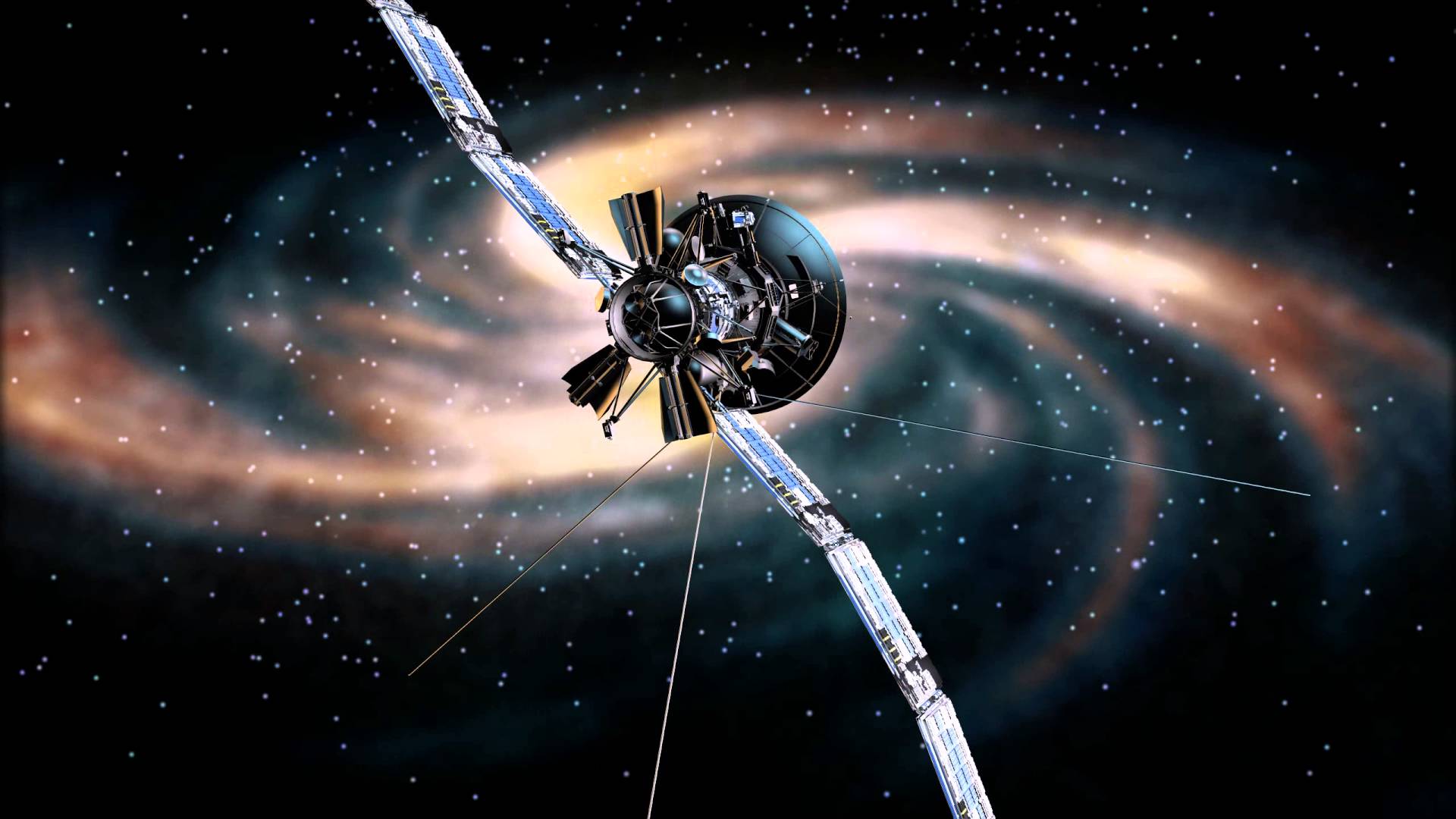
In late June, researchers reported that Voyager 1 was sending data to Earth indicating that it had lost its orientation in space. In general, the probe's problems are not surprising given that it was originally sent on a five-year journey through the solar system. Meanwhile, 45 years have passed since the launch of the probe from the Earth's surface. Therefore, the defects should not surprise anyone.


On the other hand, as long as the probe is working, everything should be done to keep it alive as long as possible. After all, Voyager 1 and its sister spacecraft Voyager 2 provide the Earth with information about interstellar space, where we will not soon have another probe.


Solution


Controllers analyzing the data sent by the probe have just announced that Voyager 1 is again transmitting correct telemetry data to Earth. It was known from the very beginning that the fault was related to the system responsible for ensuring that the probe's antenna was always directed towards the Earth. If the antenna were to turn around, we would lose contact with the spacecraft (and the history of space exploration knows too many such cases).


The engineers found that somehow this antenna control system had begun to transmit telemetry data through an on-board computer that had been out of service for many years. It was this computer that distorted the data, which then ended up on Earth as a series of illogical information.


Once this was established, the engineers sent a command to the probe forcing the information to be sent via the correct computer. The problem disappeared as he took away with his hand. Of course, it took a while to see if the remedy worked. After all, Voyager 1 is already over 23 billion kilometers from Earth, which in turn means that the signal sent from Earth is flying towards the probe for 22 hours. The signal confirming the execution of the command is flying just as much towards the Earth.


After the probe was restored to full health, the question arose: how could the probe suddenly start using a computer that everyone had long forgotten? In the coming weeks, scientists will analyze all records of the probe's on-board computers to locate the cause of all the confusion. It is possible that it all started with the wrong command sent to the instruments by another on-board computer. There is little chance of the failure repeating itself, but the researchers are still curious about what might have happened in the 'brain' of the 45-year-old probe.

Voyager 2 Probe Has Entered Interstellar Space, NASA Confirmed

Today (December 10, 2018) NASA announced that for only the second time in history, a human-made object has reached the space between the stars. NASA’s Voyager 2 probe now has exited the heliosphere – the protective bubble of particles and magnetic fields created by the sun.

Image result for Voyager 2 probe enters interstellar space

Comparing data from different instruments aboard the spacecraft, mission scientists determined the probe crossed the outer edge of the heliosphere on November 5, 2018. This illustration shows the position of NASA’s Voyager 1 and Voyager 2 probes, outside of the heliosphere, a protective bubble created by the sun that extends well past the orbit of Pluto. Image via NASA/JPL-Caltech.

This boundary, called the heliopause, is where the hot solar wind meets the cold, dense interstellar medium. Voyager 2’s twin spacecraft, Voyager 1, crossed this boundary in 2012, but Voyager 2 carries a working instrument that will provide first-of-its-kind observations of the nature of this gateway into interstellar space.

Image result for Voyager 2 probe enters interstellar space

Voyager 2 now is slightly more than 11 billion miles (18 billion km) from Earth. Mission operators still can communicate with Voyager 2 as it enters this new phase of its journey, but information – moving at the speed of light – takes about 16.5 hours to travel from the spacecraft to Earth. By comparison, light traveling from the sun takes about eight minutes to reach Earth.Together, the two Voyagers provide a detailed glimpse of how our heliosphere interacts with the constant interstellar wind flowing from beyond.

While the probes have left the heliosphere, Voyager 1 and Voyager 2 have not yet left the solar system, and won’t be leaving anytime soon. The boundary of the solar system is considered to be beyond the outer edge of the Oort Cloud, a collection of small objects that are still under the influence of the sun’s gravity.

Animated gif of Voyager

The width of the Oort Cloud is not known precisely, but it is estimated to begin at about 1,000 astronomical units (AU) from the sun and to extend to about 100,000 AU (1 AU is the distance from the sun to Earth). It will take about 300 years for Voyager 2 to reach the inner edge of the Oort Cloud and possibly 30,000 years to fly beyond it.

Voyager 2 launched in 1977, 16 days before Voyager 1, and both have traveled well beyond their original destinations. The spacecraft were built to last five years and conduct close-up studies of Jupiter and Saturn. However, as the mission continued, additional flybys of the two outermost giant planets, Uranus and Neptune, proved possible.


As the spacecraft flew across the solar system, remote-control reprogramming was used to give Voyagers greater capabilities than they possessed when they left Earth. Their two-planet mission became a four-planet mission. Their five-year lifespans have stretched to 41 years, making Voyager 2 NASA’s longest running mission.

Each spacecraft carries a Golden Record of Earth sounds, pictures and messages. Since the spacecraft could last billions of years, these circular time capsules could one day be the only traces of human civilization.