Showing posts with label meteorite. Show all posts

Building blocks of life found in meteorite that crash landed in Gloucestershire


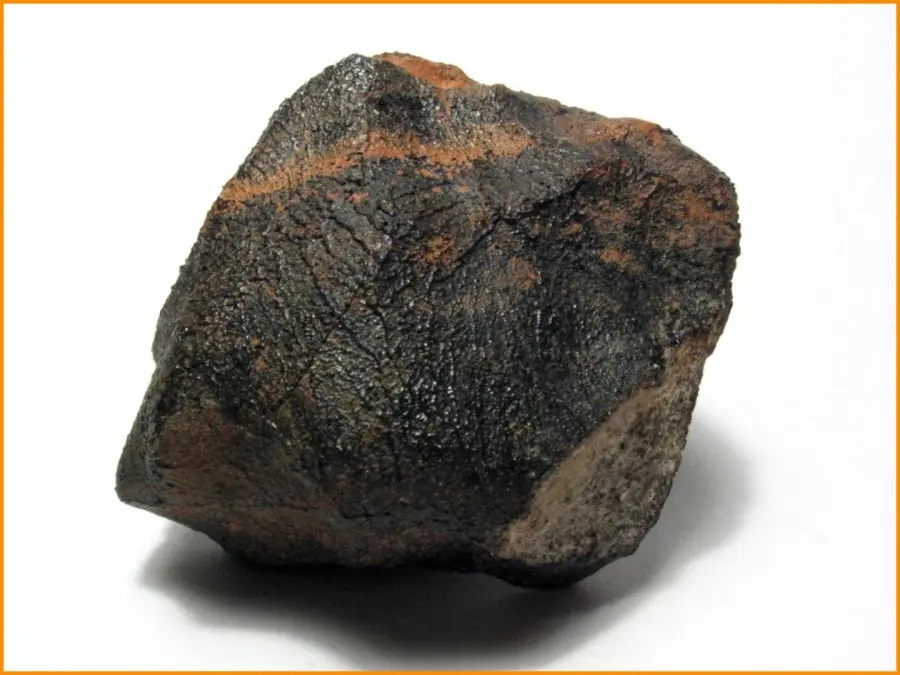
New research has been published on the organic analysis of the Winchcombe meteorite that crash landed onto a driveway in Winchcombe, Gloucestershire in 2021. The research, led by Dr. Queenie Chan, from the Department of Earth Sciences at Royal Holloway, University of London, found organic compounds from space that hold the secrets to the origin of life.


In the study, the analysis found a range of organic matter, which reveals that the meteorite was once from part of an asteroid where liquid water occurred, and if it that asteroid had been given access to the water, a chemical reaction could have occurred leading to more molecules turning into amino acids and protein—the building blocks of life.


The Winchcombe meteorite is a rare carbon rich chondritic meteorite (approximately 4% of all recovered meteorites, containing up to 3.5 weight percent of carbon) and is the first ever meteorite of this type to be found in the U.K. with an observed meteorite fall event, with more than 1,000 eyewitnesses and numerous footages of the fireball.


The amino acid abundance of Winchcombe is ten times lower than other types of carbonaceous chondritic meteorites and was a challenge to study due to the limited detection of amino acids, but with the meteorite so promptly recovered and curated, the team were able to study the organic content of the meteorite prior to its interaction with the Earth’s environment. The organic matter suggests the meteorite could represent a class of unique, weak meteorite not previously studied.


Dr. Queenie Chan, at Royal Holloway, University of London, said, “Meteorite fall happens all year round, however, what makes this meteorite fall so unique is that this is the first meteorite to have been observed by numerous eyewitnesses, recorded, and recovered in the U.K. in the last 30 years.


“Winchcombe belongs to a rare type of carbonaceous meteorite which typically contains a rich inventory of organic compounds and water. The first Winchcombe meteorite stone was recovered within 12 hours of the fireball observation event and properly curated to restrict any terrestrial contamination. This allowed us to study the organic signature truly essential to the meteorite itself.


“Studying the organic inventory of the Winchcombe meteorite provided us with a window into the past, how simple chemistry kick started the origin of life at the birth of our solar system. Discovering these life’s precursor organic molecules allowed us to comprehend the fall of similar material to the surface of the Earth, prior to the emergence of life on our own planet.

“It was an honor to be leading the team on the organic analysis of the first ever successful carbonaceous meteorite recovery in the United Kingdom. It was a pleasure and an exciting journey to be working with highly skilled and enthusiastic scientists across the country.”


The paper is published in the journal Meteoritics & Planetary Science. The wider research of the organic analysis of the Winchcombe meteorite in this study involved collaborations with Imperial College London and the University of Glasgow.


Provided by Royal Holloway, University of London

All 5 Key Ingredients of OUR DNA have been Found in Meteorites that came from Outer Space

All the ingredients of our DNA have been found on meteorites now, scientists say. What does this mean? Quite simply that life on Earth could have come from space.


Rocks from space that crashed into our planet Earth over the last century contained the five base components that store information in DNA and RNA, scientists wrote in Nature Communications on April 26.


The five "nucleobases" are adenine, guanine, cytosine, thymine, and uracil, along with a few sugars and phosphates together create genetic code of all life on Earth.

A 2-gram chunk from this rock — a piece of the meteorite that fell near Murchison, Australia, in 1969 — contains two crucial components of DNA and RNA now identified for the first time in an extraterrestrial source, researchers say.


Scientists think that these ingredients either came to Earth from space or grew in an early hot soup on the planet. With these new findings, the former theory has more evidence.


How were these compounds extracted?


Adenine, guanine are among the few compounds that were found in meteorites since the 1960s, scientists say. Traces of uracil were also picked up, but cytosine and thymine still remain "elusive," Science News reported.


Daniel Glavin from NASA's Goddard Space Flight Center said that they've "completed the set of all the bases found in DNA and RNA and life on Earth" and that "they’re present in meteorites."


The study was undertaken by Yasuhiro Oba's team from Hokkaido University in Japan and astrochemists at NASA. A few years ago, Oba developed a technique to delicately excavate and separate different chemical compounds found in meteorite dust.


Using their mild extraction technique that uses cold water instead of acids, scientists found life-creating bases and compounds in four meteorite samples from Australia, US state of Kentucky, and Canadian province of British Columbia.


The discovery of these compounds in meteorites means that it is possible life on Earth as it stands today was created by compounds that came from outer space.


What do you think about this discovery? Let us know in the comments below.

Scientists discover meteorite older than Earth that likely came from a "protoplanet"

Scientists are discovering all sorts of amazing history told by the meteorites found scattered across the Earth’s surface. 

Now a team led by Jean-Alix Barrat, a geochemist from the University of Western Brittany in France, have announced in a study that one such rock is apparently incredibly ancient, predating the Earth altogether. 

They believe it comes from a long-gone protoplanet, a baby planet that never got the chance to grow up, so to speak.

Its name is EC 002, and it may provide new insights into the early days of our solar system.

A basaltic achondrite from Australia. Credit: H. Raab/Wikimedia Commons

Erg Chech 002, or EC 002, was found in Adrar, Algeria last May in the nearly uninhabited Erg Chech region of the Sahara Desert. It was one of several chunks of meteorite discovered — together they weighed 32 kilograms (about 70 lbs). The Lunar and Planetary Institute describes EC 002 as being “relatively coarse grained, tan and beige appearance with sporadic larger green, yellow-green and less commonly yellow-brown crystals.”

A rough identification of EC002 classified it as an achondrite, which immediately differentiated it from most meteorites, which are chondritic.

Chondrites are pre-planetary stony rocky formed billions of years ago from dust and mineral grains of the early solar system.

Achondrites are rocks blasted off the face of planetary bodies, so they are newer. Their composition can provide clues to the formative processes of their sources since they they exhibit characteristics consistent with the period of internal melting that separates the core from the crust of a young planet. They’re also relatively uncommon. Of the tens of thousands of meteorites listed in the Meteroitical Bulletin Database, just 3,179 of them are achondrites.

Most of the meteorites found, about 95 percent, come from just two bodies out there in space, and about 75 percent may come from a single, large asteroid called 4 Vesta.

Here’s where we go from unusual to very unusual. Achondrites are usually basaltic, originating in a planetary body’s basaltic crust. EC 002 is not. It’s volcanic, a type of rock called andesite. The scientists have measured the radioactive isotopes of aluminum and magnesium it contains and concluded the minerals crystallized about 4.566 billion years back. Earth, by contrast, dates back only 4.54 billion years.

This chunk of cooled magma is a lonely survivor of that long-ago past. The authors write that “no asteroid shares the spectral features of EC 002, indicating that almost all of these bodies have disappeared, either because they went on to form the building blocks of larger bodies or planets or were simply destroyed.”

The andesite in EC 002 is interesting. On Earth, andesite’s sodium-rich-silicates are found in subduction zones where one tectonic plate sinks under another. (The basalt-like material in most chondrites forms when magnesium- and iron-rich lava cools.)

Still, EC 002 isn’t the first andesite meteor found, and a study of two of them (Graves Nunataks 06128 and 06129) discovered in Antarctica raises the possibility that they form from the melting of planetary bodies comprised of chondrites.

Some have theorized that if this is so, and since chondrites are so common, it could be that their melting into an andesite crust was a common occurrence during planetary formation. Indeed, Barratt’s study says, “It is reasonable to assume that many similar chondritic bodies accreted at the same time and were capped by the same type of primordial crust.”

It’s an interesting notion, albeit with two problems.

First, the light-reactive properties of EC 002 aren’t like anything else in the universe among the 10,000 objects in the Sloan Digital Sky Survey database.

Second, not that many andesite meteors have been found, making one wonder where they all might’ve gotten to. They might have gotten smashed up and broken apart. Or maybe they were subsumed in the formation of later planets. Like our Earth.

The study is published in the journal Proceedings of the National Academy of Sciences.

Scientists just found a meteorite from another star system that fell on Earth


A Harvard University professor thinks that a meteorite that fell into the water near New Guinea in 2014 could have come from another solar system. This is supported by data from an American reconnaissance satellite.


2014 Meteorite


According to Harvard professor Avi Loeb and his doctoral student Amir Siraj, the meteorite that slammed into the Earth near New Guinea in 2014 may have come from beyond the Solar System. They arrived at this conclusion after studying data from astronomical catalogues.


The CNEOS 2014-01-08 object had a diameter of roughly 50 cm, according to estimates. And the researchers' measurements show that its speed was too high before entering the Earth's atmosphere for the Sun to keep it in orbit.


Most scientists, however, do not share Loeb's enthusiasm. The principal estimations of CNEOS 2014-01-08's trajectory were acquired from an American military satellite. His measures' precision is a military secret. As a result, no one can say for certain whether the speed estimate is true. This brings the object's interplanetary origin into doubt.


The third interstellar object discovered?


Only two objects in the Solar System are known to be interstellar at this time: comet Borisov and asteroid Oumuamua. If CNEOS 2014-01-08 truly arrived from the depths of space, it will be the third object on this list.


Furthermore, the asteroid's fragments could be the first samples of non-Solar System stuff to get into the hands of scientists. The only issue is that much of the CNEOS 2014-01-08 vaporised during flight through the atmosphere because to its small size. And the bits that have made it to the surface are now at the bottom of the sea.


However, scientists remain upbeat. The search region for CNEOS 2014-01-08 wreckage is specified as a 10 by 10 kilometre square. As a result, its bottom will be easier to examine using a trawl. Furthermore, the meteorite remnants should be magnetic, which will make the process much easier.


Questions and answers


Doubts surrounding the provenance of CNEOS 2014-01-08 add to Avi Loeb's eccentricity. He has already argued that this object is more than just an interplanetary meteorite, but that it was produced by an extraterrestrial civilization. He also discusses Borisov's comet and Oumuamua. All of this does not increase his standing in the international community.


However, the United States Space Command abruptly sided with the researcher. It produced a document in April 2022 confirming that the satellite had sufficient precision and that CNEOS 2014-01-08 is truly an interstellar object.